
Institute Colloquium
MEET THE EXPERT ON ULTRAFAST SPECTROSCOPY AND CHEMICAL REACTION DYNAMICS
Prof. Koichi Iwata
(Gakushuin University/ Japan)
Date: July 8, 2026
Start: 2 p.m.
Venue: Conference room of Leibniz IPHT
After earning his Doctor of Science (Dr.Sci.) in Physical Chemistry from The University of Tokyo in 1989, Koichi Iwata worked as a postdoctoral fellow at The Ohio State University in the United States. He then served as a research associate at the Kanagawa Academy of Science and Technology from 1991 to 1997. In 1997, he joined The University of Tokyo as an associate professor, where he continued his research in spectroscopy and physical chemistry until 2009. During this period, he also held visiting appointments at Waseda University and the Institute for Molecular Science. Since 2009, he has been Professor of Chemistry at Gakushuin University, focusing on the development of advanced spectroscopic methods and the study of chemical reaction dynamics.
What we learn about molecular systems with ps/fs time-resolved spectroscopies
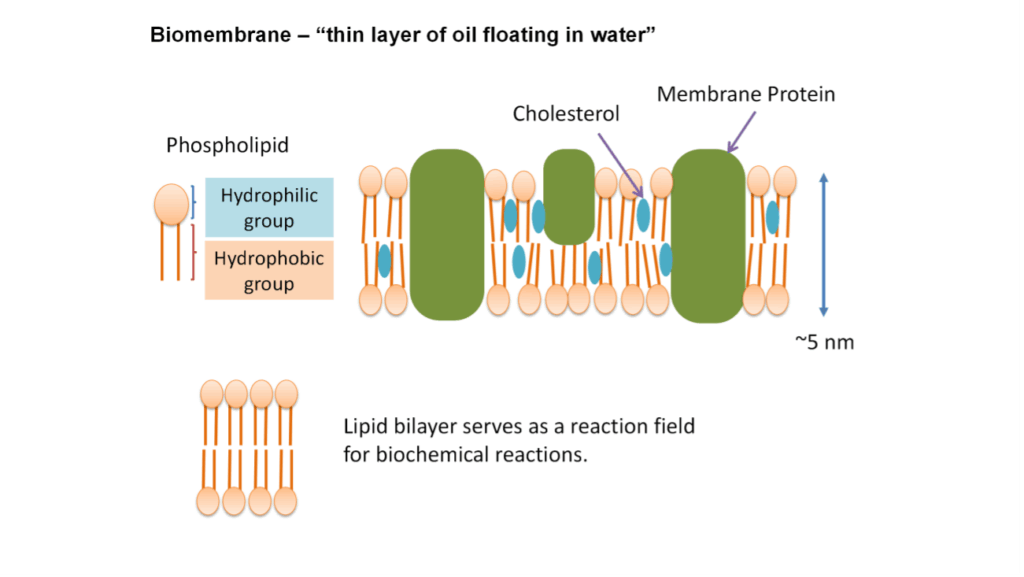
Molecules in solution “collide” with each other roughly ten times in a picosecond. Molecular events that occur on a picosecond or sub-picosecond timescale play essential roles in a wide range of phenomena, particularly in chemical reactions. We have developed spectrometers for picosecond and femtosecond time-resolved measurements, including instruments for spontaneous Raman, near-IR non-linear Raman, or near-IR absorption spectroscopy. By using these spectrometers, we study the properties of artificial lipid bilayer membranes and biomembranes, the electronic relaxation and energy transfer processes of biological pigments, and the inter-molecular interactions that induce.
The lecture will be given in English.
GUESTS ARE WELCOME
Contact person at Leibniz IPHT: Volker Deckert